Korean folktales for children
Tales of brave sisters, clever rabbits and very silly tigers — told in Korea for hundreds of years, retold here in read-aloud English for ages 4–8.
There are 9 stories below, with 9 available in full for free. No sign-up, nothing held back for a newsletter. Each comes with a note on where the tale comes from, the Korean words inside it, and roughly how long it takes to read out loud.
A child in Ohio can name three European fairy tales before breakfast and has probably never met a tiger who is frightened of a dried persimmon. These stories are as old and as strange as any in the world, and outside Korea almost nobody knows them. That is the gap this site exists to close.
If you are choosing for a classroom or a specific age, the parents and teachers guide sorts the stories by theme and length, with discussion questions.
All 9 stories
-
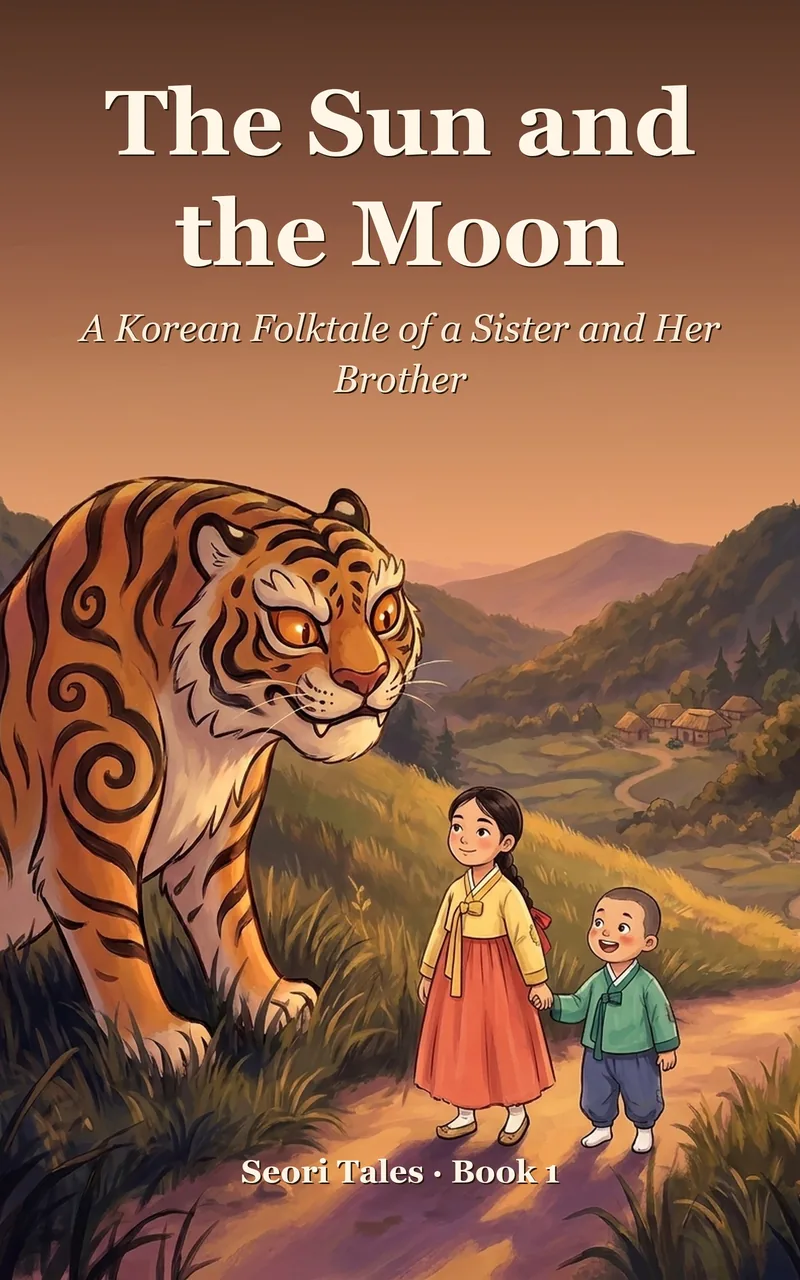
The Sun and the Moon
해와 달이 된 오누이 · ages 4-8 · about 4 minutes to read aloud
The one to start with. A tiger in a mother's clothes knocks at the door, and two children have to see through him — which is the oldest lesson in the book and still the most useful. It ends by putting them in the sky, so the fright resolves into something a child can point at the next evening.
-
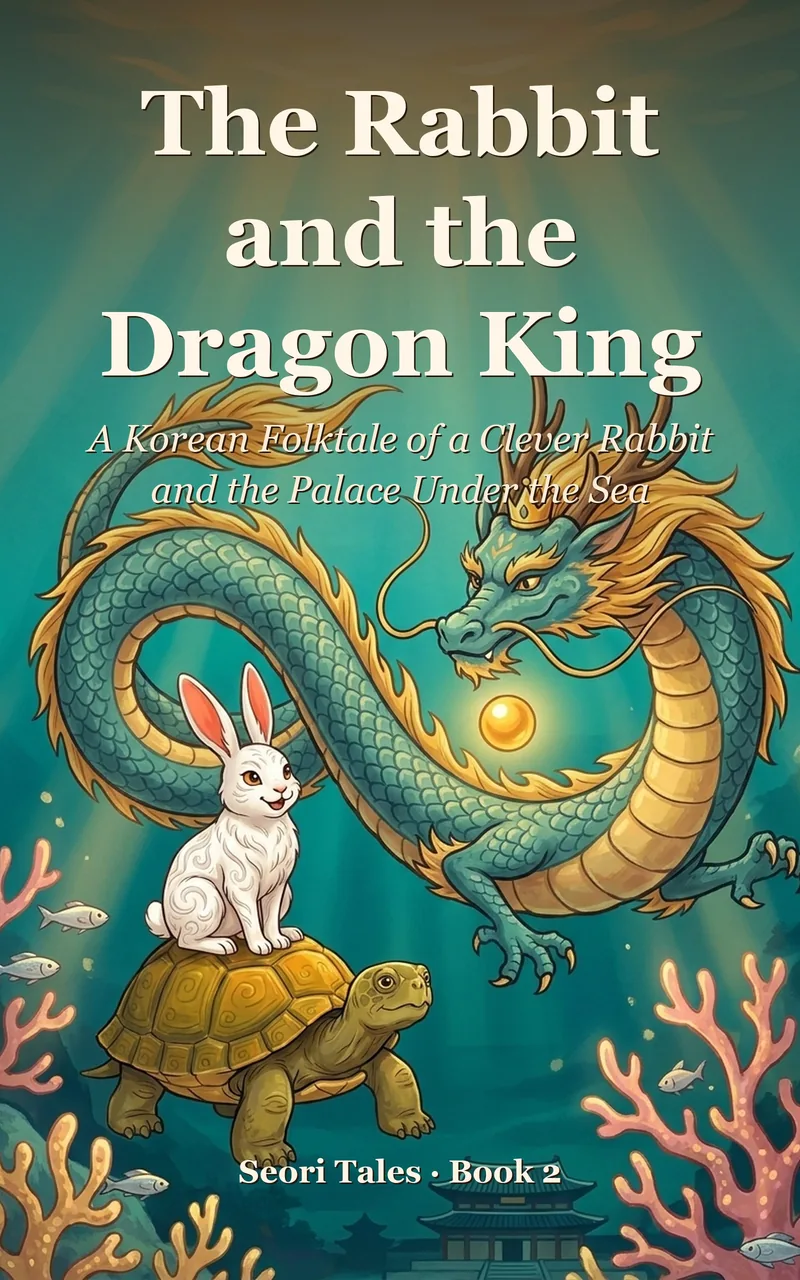
The Rabbit and the Dragon King
별주부전 · ages 4-8 · about 6 minutes to read aloud
A funny choice, and the best for a child who likes being cleverer than the grown-ups. A turtle talks a rabbit into visiting an undersea palace without mentioning what the Dragon King wants with him. The rabbit gets out by lying beautifully, which children find deeply satisfying and adults may want to discuss afterwards.
-
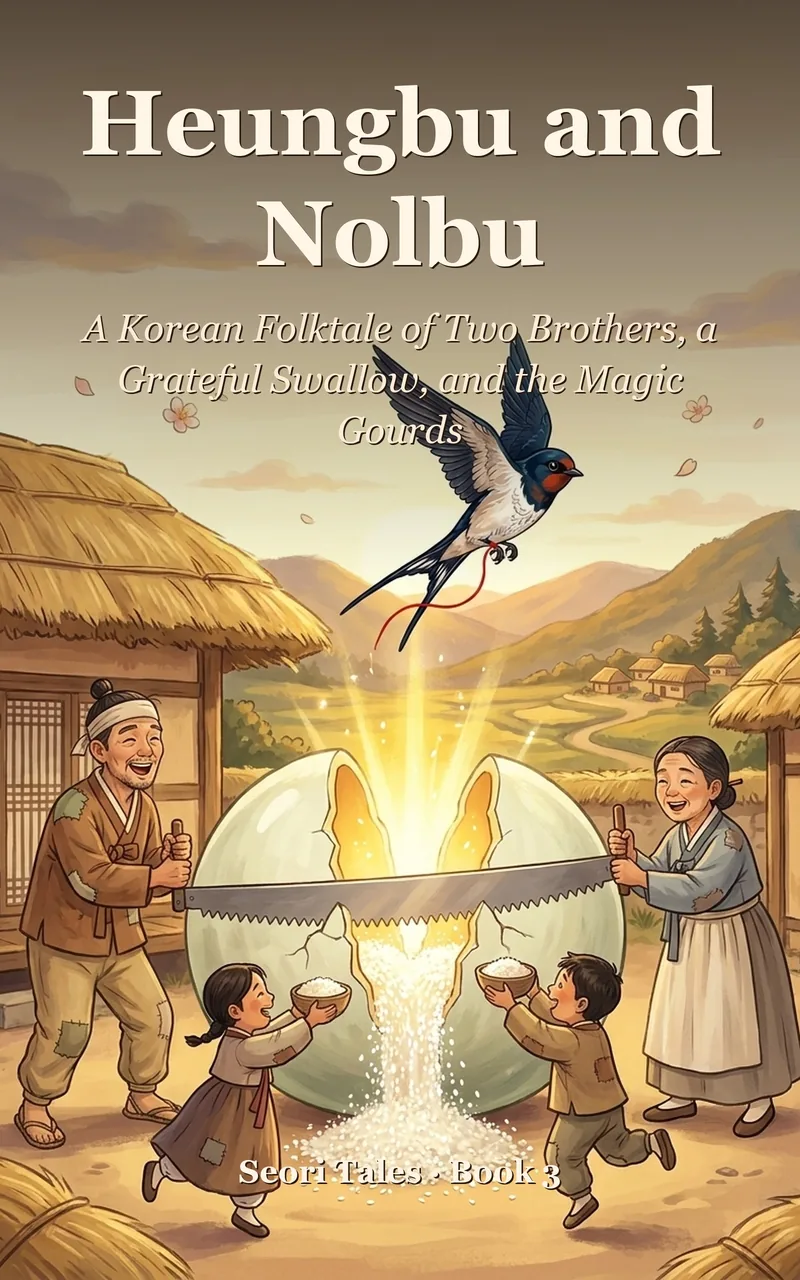
Heungbu and Nolbu
흥부와 놀부 · ages 4-8 · about 6 minutes to read aloud
Korea's great story about two brothers, and the one most likely to start an argument at bedtime. Heungbu mends a swallow's broken leg and is repaid; Nolbu breaks one on purpose to get the same reward. Children work out on their own why it does not go well for him.
-
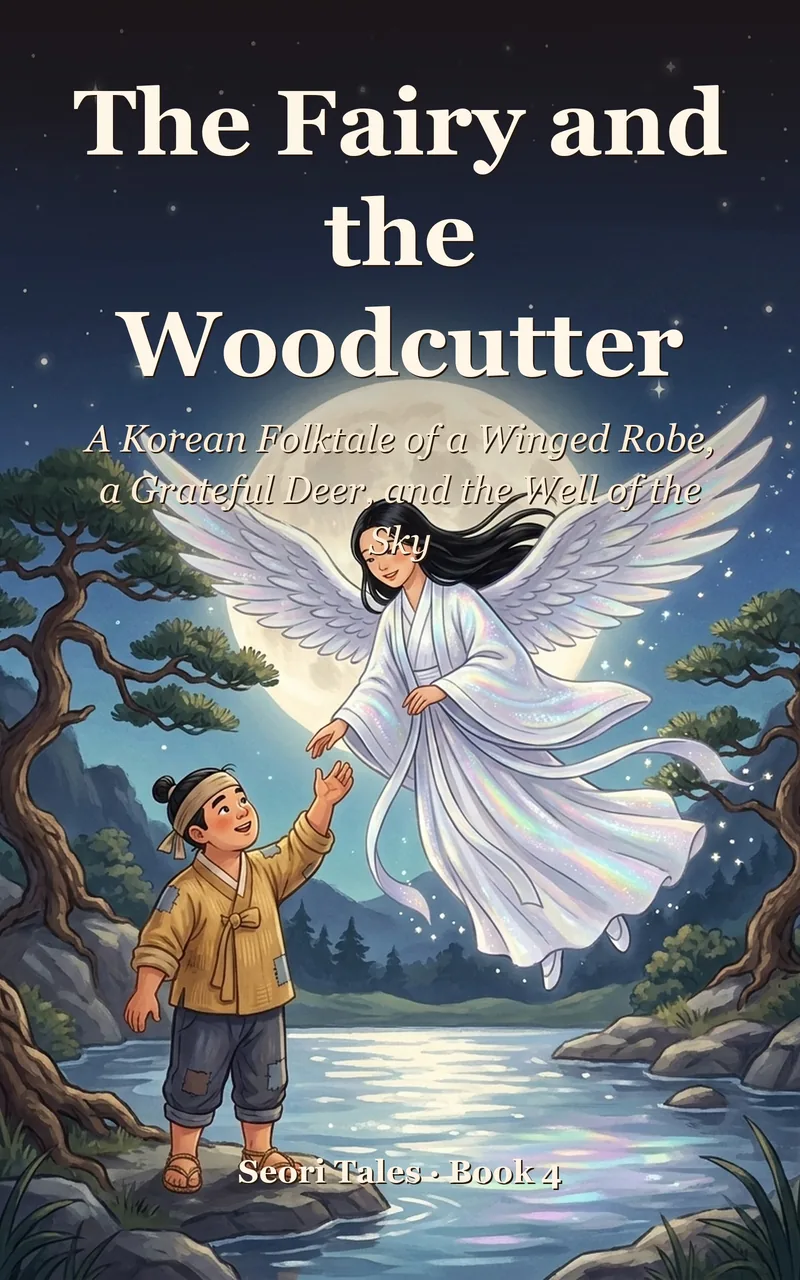
The Fairy and the Woodcutter
선녀와 나무꾼 · ages 4-8 · about 9 minutes to read aloud
The longest and the saddest, better at six than at four. A lonely woodcutter hides a heavenly robe so its owner cannot leave, and years later has to decide whether to give it back. There is no villain in it, which is precisely what makes it stay with people.
-
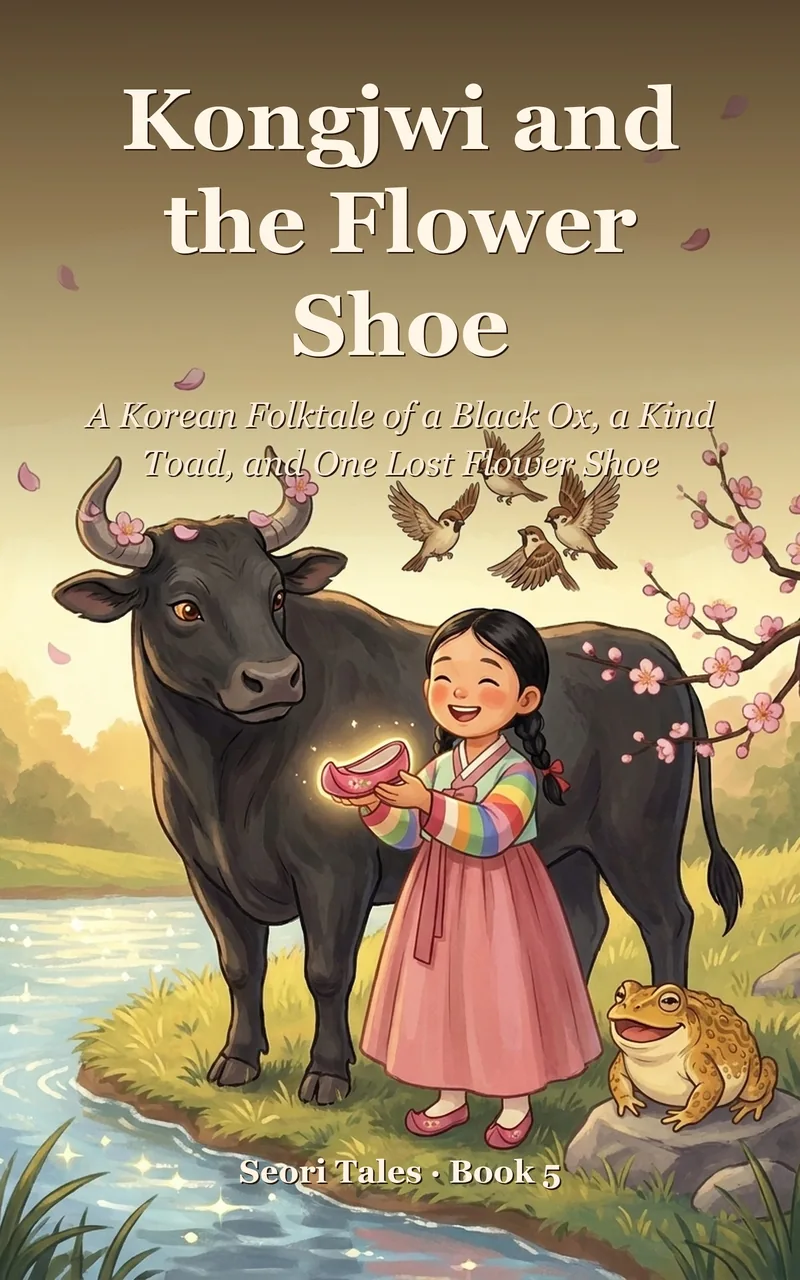
Kongjwi and the Flower Shoe
콩쥐팥쥐 · ages 4-8 · about 3 minutes to read aloud
Korea's Cinderella, and the easiest entry point for a child who already knows the European one. The stepmother and the impossible chores are familiar; the black ox, the flock of sparrows and the kind toad who plugs a leaking jar are not. Good for asking how two countries told the same story differently.
-
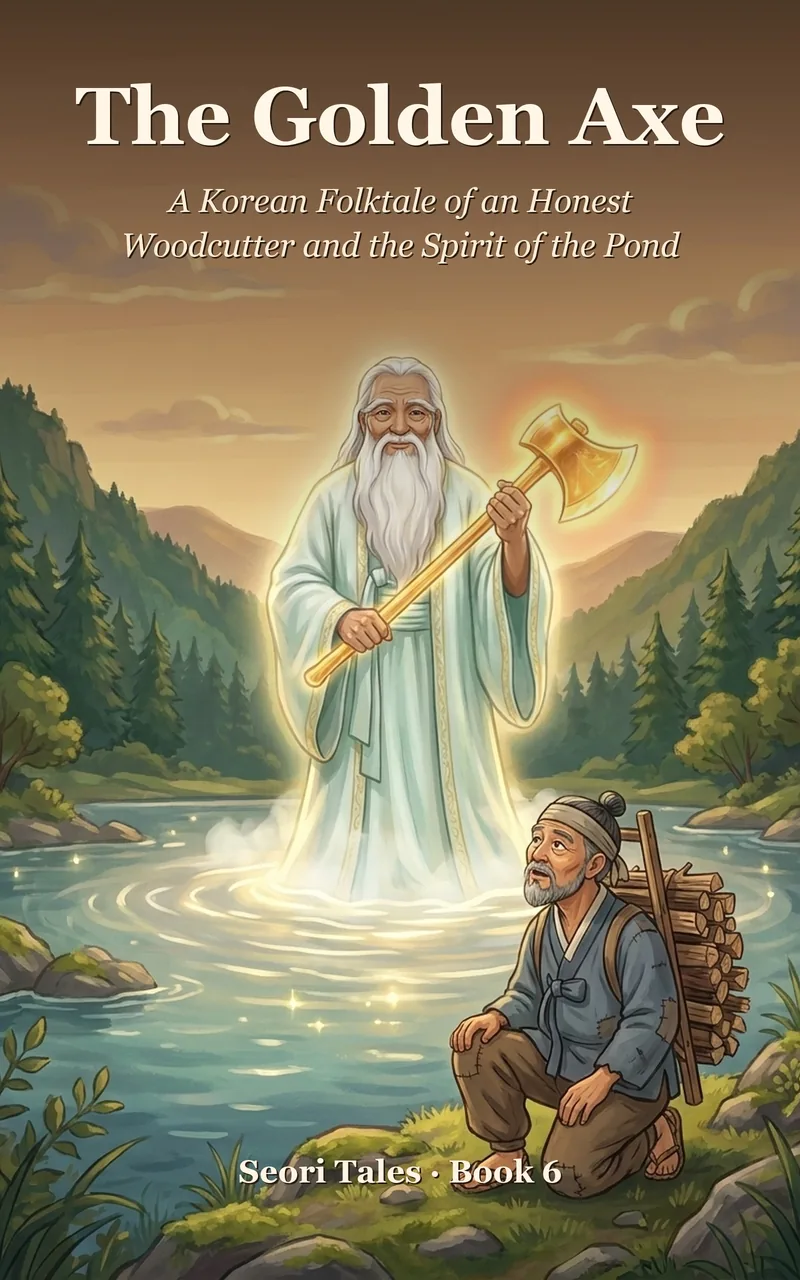
The Golden Axe
금도끼 은도끼 · ages 4-8 · about 2 minutes to read aloud
Short and direct — an honest woodcutter, a lost axe, and a mountain spirit offering him a better one. It works on very young children because the choice is visible and the consequence is immediate. A greedy neighbour tries the same trick, which is where the real ending lives.
-
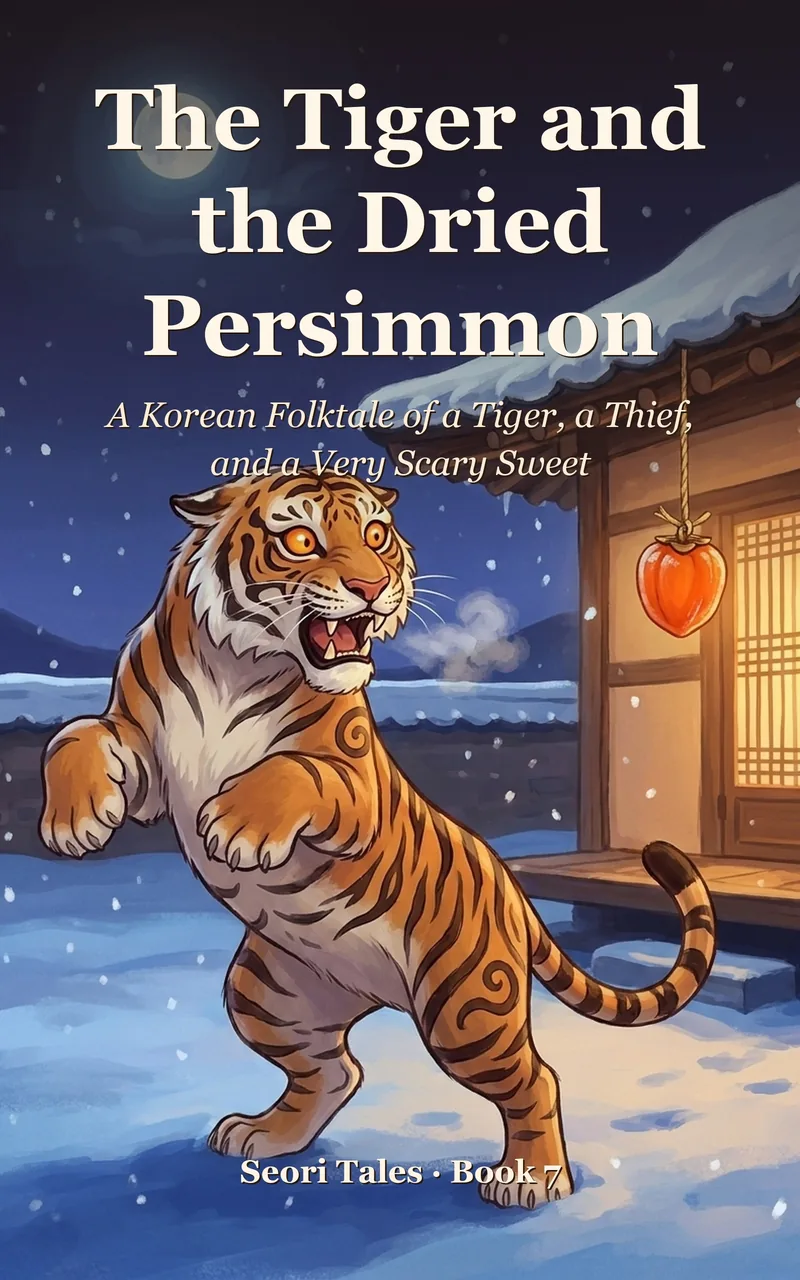
The Tiger and the Dried Persimmon
호랑이와 곶감 · ages 4-8 · about 2 minutes to read aloud
Pure comedy, and the best read-aloud of the lot. A tiger listens at a window while a mother fails to quiet her crying baby, then succeeds instantly by mentioning a dried persimmon — and the tiger concludes that a gotgam must be the most terrifying creature in Korea. Give the tiger a voice and this one runs itself.
-
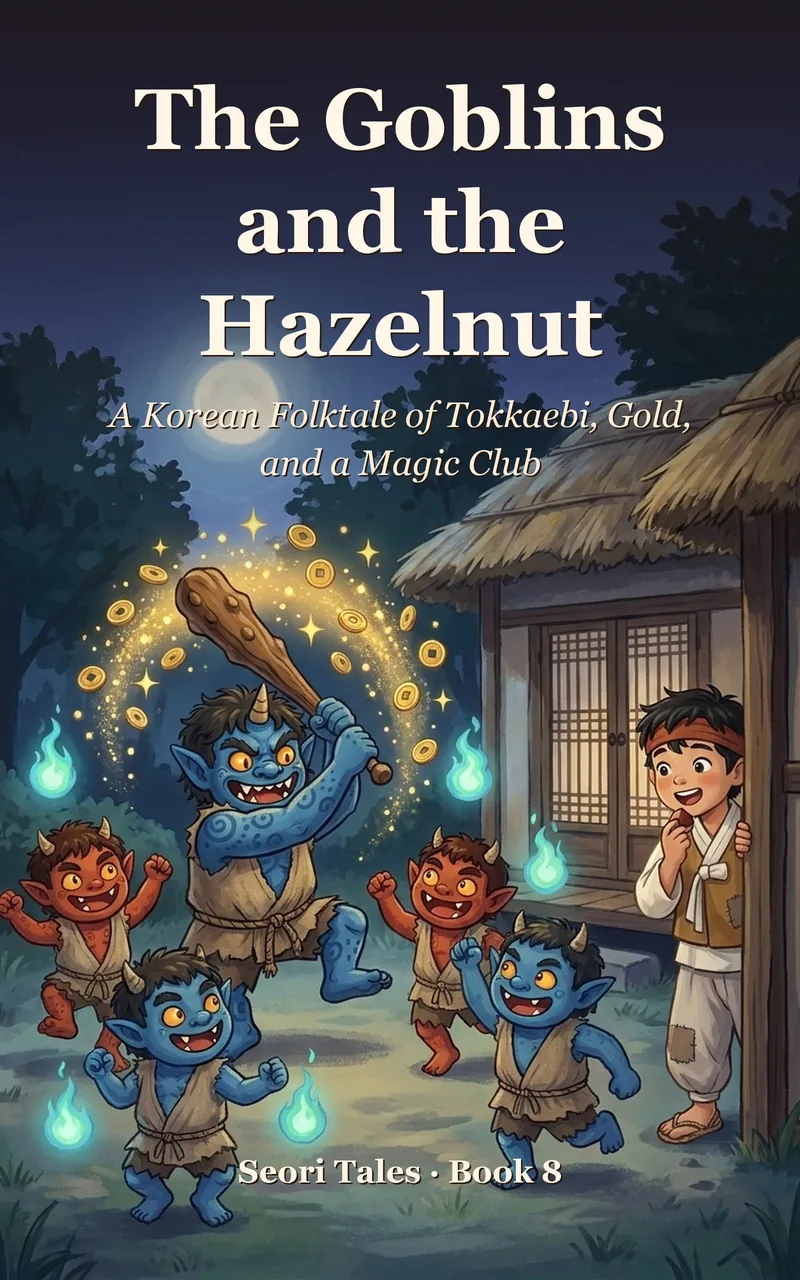
The Goblins and the Hazelnut
도깨비 방망이 · ages 4-8 · about 3 minutes to read aloud
Choose this one for a child who likes joining in. Count the hazelnuts for the family, shout the magic words with the tokkaebi, then make one loud CRACK. A generous boy and a greedy neighbour try the same trick, with very different results.
-
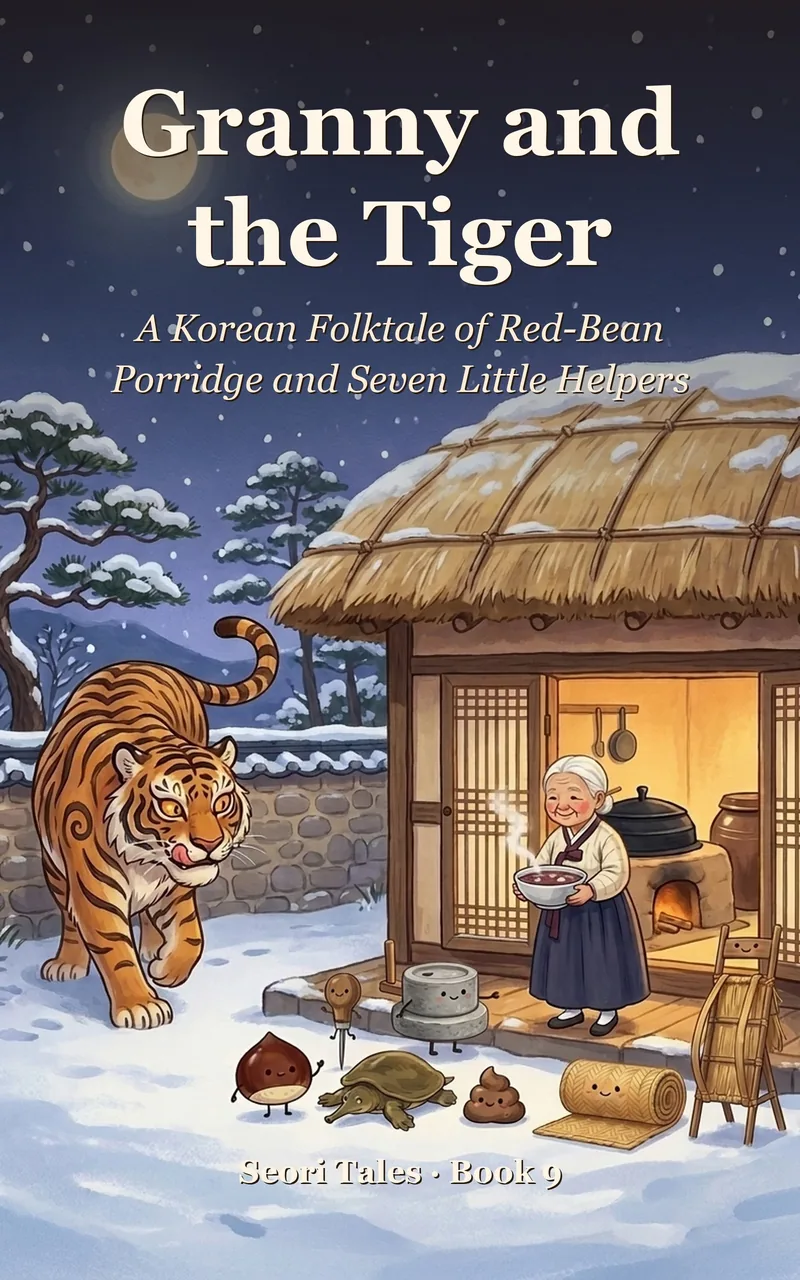
Granny and the Tiger
팥죽 할머니와 호랑이 · ages 4-8 · about 2 minutes to read aloud
A winter story for children who enjoy a noisy team effort. Seven small helpers take turns asking for porridge, then work together to send a much bigger tiger away. Let each listener play a helper and join in with the sounds.
Read it free · picture book coming soon
What makes a Korean folktale different
They were carried by grandparents, not by books. That shows: they move fast, they repeat their best lines so a listener can join in, and they end on a turn a small child can feel coming. Most take under ten minutes to read aloud, which is not an accident — it is roughly how long a child will sit still after dinner.
They are also less tidy than the fairy tales most English-speaking children grow up with. Nobody is purely wicked, rewards are odd and specific — a gourd full of treasure, a rope let down from the sky — and several of them end without anyone getting married. The tiger is usually the villain, and he is usually a bit of an idiot.
Several will feel familiar anyway. Kongjwi and the Flower Shoe is Cinderella with a black ox and a helpful toad. The Golden Axe tests an honest man the way Aesop does. That overlap is the best part to talk about: two countries, the same worry, a different animal.
How these retellings are made
Every tale here is public domain, told for centuries before anyone wrote it down. There is no single correct version of any of them — the one your Korean neighbour grew up with may differ from ours in its details. We keep the beats Korean tellers keep, cut what a four-year-old cannot hold, and never flatten a story into a lesson.
Nothing is sanitised into mush, and nothing is made scarier than a bedtime allows. Folktales put danger in on purpose and then resolve it; a tiger that is never frightening is not worth escaping. More on how the books are put together is on the about page.